

Sinus Infection Signs and Dangers
Prevention, Signs & When to Visit the ER
Healthcare professionals consistently emphasize the risks of complications from the flu, specifically the influenza virus, with sinus infections being among the most common consequences. RapidCare Emergency Room’s team is dedicated to raising awareness about preventable illnesses like sinus infections through our article on Sinus Infection Signs and Dangers. We’ve all encountered the terms “sinusitis” or “sinus infection,” often leading to confusion with other ailments. We hope to help the communities that we serve in the prevention, warning signs, and treatment of sinus infections.
Sinus Infection 101
Sinus infections, medically known as sinusitis, can cause significant discomfort and disrupt daily life. To maintain optimal sinus health, it’s essential to comprehend what a sinus infection entails, its root causes, and effective preventive measures. At RapidCare Emergency Room, our unwavering commitment to your well-being operates around the clock, ensuring you receive swift and reliable care, even during holidays.
What is a Sinus Infection?
Before we get to know about sinus infection signs and dangers, let’s define what it is. Sinusitis occurs when the tissues lining the sinuses become inflamed, often due to a viral or bacterial infection. The sinuses are air-filled cavities located in the facial bones, and when they become blocked or filled with fluid, it can lead to a sinus infection.
Watch the video on: Sinus Infection Signs and Dangers
Signs of a Sinus Infection
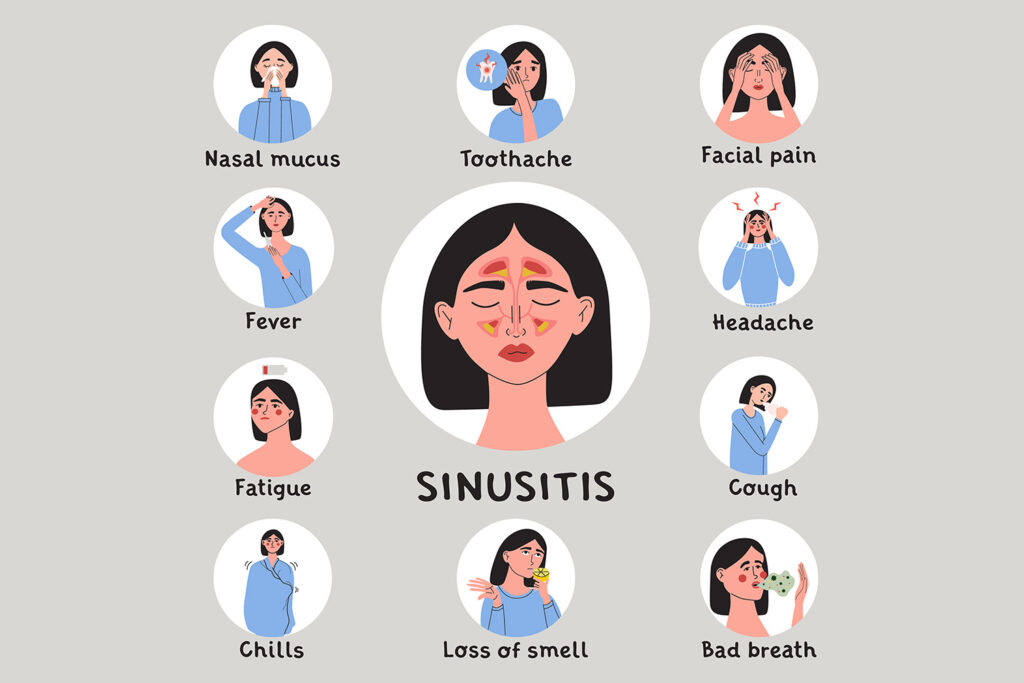
Now, let’s get to know more about the sinus infection signs and dangers. The following are the warning signs:
- Nasal Congestion: Difficulty breathing through the nose due to blockage.
- Facial Pain or Pressure: Discomfort around the eyes, forehead, cheeks, or a toothache in the upper jaw.
- Headache: Typically concentrated in the forehead area.
- Thick Nasal Discharge: Yellow or green mucus indicating infection.
- Coughing: Often worsens at night.
- Sore Throat: Postnasal drip can cause irritation.
- Fatigue: Feeling tired or lethargic.
- Loss of Smell or Taste: Commonly reported with sinus infections.
- Bad Breath: Resulting from nasal discharge.
Causes of a Sinus Infection
Understanding the diverse causes behind sinus infections is crucial for effective prevention and treatment.
- Viral Infections: The common cold and influenza can pave the way for sinusitis.
- Bacterial Infections: Secondary bacterial infections can occur following a viral illness.
- Allergies: Reactions to allergens can cause inflammation, leading to sinusitis.
- Nasal Polyps: Noncancerous growths in the nasal passages can contribute to blockages.

Tips to Prevent a Sinus Infection
- Stay Hydrated: Adequate hydration helps keep nasal passages moist, preventing irritation.
- Practice Good Hygiene: Regular handwashing reduces the risk of transferring viruses and bacteria to your face.
- Use a Humidifier: Adding moisture to the air can ease sinus congestion and prevent infections.
- Avoid Allergens: Identify and limit exposure to allergens that may trigger sinus issues.
- Nasal Irrigation: Rinsing your nasal passages with a saline solution helps clear mucus and reduce inflammation.

Treatment for a Sinus Infection
- Rest and Hydration: Allow your body to heal by getting adequate rest and drinking plenty of fluids.
- Nasal Decongestants: Over-the-counter decongestants can help relieve congestion.
- Warm Compresses: Applying warm compresses to the face can alleviate pain and pressure.
- Prescription Medications: In some cases, antibiotics or prescription-strength decongestants may be necessary.
Warning Signs to Visit the ER
While most sinus infections can be managed at home or with a visit to a primary care physician, certain warning signs warrant immediate attention at the emergency room:
- Severe Pain: Intense facial pain or headache that does not respond to over-the-counter pain relievers.
- High Fever: A persistent high fever may indicate a more severe infection.
- Vision Changes: Any changes in vision should be addressed promptly.
- Difficulty Breathing: If you experience significant difficulty breathing, seek emergency care.
- Worsening Symptoms: If symptoms worsen or persist for more than a week despite at-home treatment.
Do Not Take the Dangers Lightly
What begins with a cold or the flu can escalate into a sinus infection or sinusitis. If left untreated, it can lead to serious potential complications such as:
- Infection of the eye and its surrounding tissue
- Sinus cavity blood clot (thrombosis)
- Meningitis
- Brain abscess
- Bone infection

Rapid Care ER, Emergency Care With Compassion
At RapidCare Emergency Room, we understand the urgency of your health needs. Our facility is open 24/7, ensuring you have access to quality care with little to no wait, even during holidays. Don’t hesitate to visit us if you experience severe symptoms or have concerns about your sinus infection. Your safety and health matter most to us.